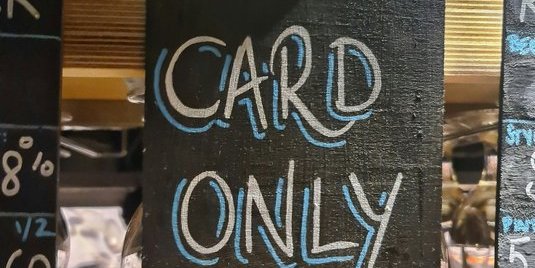

You've seen them everywhere. Those glossy advertisements painting a picture of payment perfection: the cheerful barista, the customer effortlessly waving their phone over a sleek terminal, the street vendor sporting a contactless reader like a badge of modernity. Even grandma, once clutching her purse protectively, now taps her smartwatch with the confidence of a digital native.
The message couldn't be clearer if it were written in neon: digital reigns supreme. And if you're still reaching for those crumpled notes in your wallet? Well, you're either hopelessly nostalgic or suspiciously old-fashioned.
Manufactured Convenience: Who Really Benefits?
Let’s get real about “convenience.” It isn’t some natural evolution or universal truth. It's a product, carefully crafted and aggressively sold. The so-called ease of digital payments is less about solving your problems and more about creating new streams of profit for the companies behind the tech.
- Advertising campaigns flood your feeds with images of effortless, tap-and-go living, making cash look clunky by comparison.
- Social media influencers and sponsored content reinforce the idea that paying with your phone is the only way to keep up.
- Mobile payment apps offer loyalty points, discounts, and gamified rewards—subtle nudges that turn convenience into habit, and habit into dependence.
This isn’t about making your life easier out of the goodness of anyone’s heart. It’s about capturing your transactions, your data, and ultimately, your loyalty. Every “frictionless” payment is a profit for the companies collecting fees, analysing your behaviour, and selling your information to the highest bidder.
Cash: The People's Money
Here’s the thing about cash: you never see it plastered across billboards or popping up in your social feeds. Not because it’s too cool for advertising, but because it’s public money. Cash isn’t owned by a corporation with a marketing department.
It’s owned by all of us. There’s no company trying to convince you to use cash, because when you use it, the only people who profit are the public. The benefits go back into society, not into the pockets of tech giants or payment processors. Cash is your money, your infrastructure, your freedom.
The Convenient Criminality Argument
Critics love pulling out the old "cash enables crime and tax avoidance" card. Sure, it can. But so can digital payments, from cryptocurrency scams to multinational corporations dodging taxes through ‘optimisation’ schemes.
More importantly, let’s talk about the millions who operate outside the formal banking system. This isn’t a lifestyle choice—it’s a matter of necessity.
For many, opening a bank account is out of reach due to lack of documentation, unstable housing, or simply not meeting regular income or minimum balance requirements. Others are excluded by high fees, poor credit, or the closure of local branches.
In many parts of the world, cash is the only way to participate in daily life: to buy food, pay rent, or earn a living. These are street vendors, gig workers, refugees, and people in rural or underserved communities.
Framing them as part of the problem isn’t fighting crime; it’s pathologising poverty and ignoring the real barriers that keep people unbanked. Would they not prefer the security of regular pay, social security, and healthcare if the system were truly open to them?
The Reality Behind the Hype
So next time you see that smiling barista or the tap-happy grandma, remember: the story isn’t as simple as “people just want convenience.”
The world of digital payments is designed to look inevitable and neutral, but it’s anything but. It’s a marketplace where your choices are shaped, your habits are tracked, and your options are quietly narrowed.
Cash doesn’t advertise because it does not make a profit for corporations. It doesn’t collect your data or charge you for access.
It just works—for everyone, every time. And in a world obsessed with manufactured convenience, that’s a kind of freedom worth holding onto.