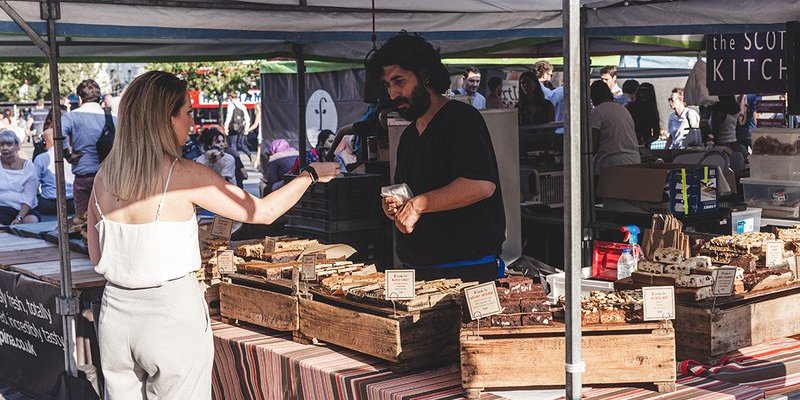

While payment choice is good for customers, the cost of facilitating cashless options can be challenging for small businesses and may necessitate price increases, which are not so good for customers. Where possible, paying cash can help keep money within local communities and prices down.
According to financial news site This is Money, around 99.9 percent of UK companies are classed as small businesses. For corner shops, hairdressers and cafes alike ‘the costs of providing a card machine and facilitating [cashless] payments are threatening to cripple any profits they make.’
Journalist Adele Cooke cites figures from campaign group Axe the Card Tax showing the cost of processing card payments in Britain has increased by 600 percent over the past nine years, with Brexit meaning there is no longer a limit on the amount businesses can be charged for processing credit and debit card payments.
For each card transaction, Cooke explains, a business pays four separate fees: a merchant service charge, covering the cost of processing a payment, a terminal charge for the chip and pin machine, an authorisation fee to test a payment will go through, and a gateway fee to cover the cost of processing transactions online. ‘As a result, many small businesses are encouraging customers to pay in cash.’
Martins Bakery—a small Cornish business with three outlets—says it has paid over £2,300 in card processing fees over the past year. Had the transactions been made in cash, incurring only bank fees, it says the cost would have been ‘more than five times less’ at around £400.